|
How was PBET Introduced into the Semiconductor Industry?
A few semiconductor equipment suppliers and chipmakers were adhering to some or all of the PBET steps and characteristics during the 1980s, and key individuals from these organizations played a role in the formalization of PBET in the semiconductor industry in the 1990s.
In 1992, the first conference of the Technician Performance Improvement Council(TPIC) was held. After that, in the early years, about one hundred representatives from many chip manufacturers and equipment suppliers met annually to learn from one another and to establish guidelines for equipment training.
The Council's first three task forces were established in 1992 to develop industry guidelines for these areas: reference manuals, training programs, and evaluation of training programs.
All three task forces recognized the difficulty of proceeding without basic principles to serve as a common plumb line. It was suggested that good training would be recognized if certain characteristics were present. The original list of "characteristics of good training" became what we now call the "PBET Characteristics."
These characteristics were drawn from the writings of Robert Mager, a world-wide leader in the performance and training profession. His books are recommended in the PBET Workshop and on this web site.
NOTE: TPIC was originally sponsored jointly by SEMATECH and SEMI-SEMATECH and was known at first as the Technician Training Council, (TTC). TPIC continued to function until about 2008 when its activities ceased (temporarily, it was thought at the time). Economic conditions in the 2008 downturn had made it difficult for members to continue sustained efforts.
Who Came Up With the Name "PBET"?
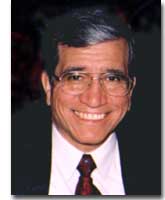
Julian Serda
aka "The Original Mr. PBET"
|
Julian Serda received wide recognition for his work in developing performance-based training programs while working as Training Manager at Signetics during the early 1980s. Later, as an independent consultant, he assisted several semiconductor suppliers in the development of performance-based training for their front end tools.
By 1994, Serda was working in the training group at SEMATECH. He saw that TPIC had established the "PBET Characteristics" as a guideline but he knew that the industry would need help with implementation of the guidelines, a train-the-trainer workshop that focused on the "characteristics of good training" that the TTC had identified.
|
Thus, during 1994-1995, Serda developed the Workshop that he called the "Performance-Based Equipment Training" Workshop. So, "PBET" was born. Serda has also worked for AMD, Spansion, and Global Technologies. He is the co-author of a college textbook, Semiconductor Manufacturing Technology (2001). He can rightly be called, the father of PBET, an industry leader who devoted his career to common sense performance improvement.
How Did PBET Proliferate?
During the 1980s, Intel managers responsible for coordinating training delivery with its equipment suppliers had been urging suppliers to implement performance-based training. They commonly recommended that suppliers' trainers attend Robert Mager's combined workshops (Criterion-Referenced Instruction [2 weeks] and Instructional Module Development [2 weeks] totaling 4 weeks of training!).
After Serda created the PBET Workshop, Intel's equipment training group had a new option, a shorter workshop that focused specifically on semiconductor equipment training. It would be harder for suppliers to shrug off performance-based training as not applicable to high tech equipment.
Because Intel was one of the worldwide leading chipmakers with a huge purchasing budget, its policy of pushing mandatory standards throughout the industry (by, in effect, requiring PBET in the equipment purchasing contract) had a powerful impact on hundreds of suppliers. This in turn created a great demand for the PBET Workshop.
Richard Goutal had been invited by Serda to help in piloting the original workshop in the fall of 1994. And when the demand for the workshop began to grow in 1995, Serda began to refer inquiries to Goutal. Since 1995, fueled by Intel-driven demand, Goutal has trained over 1700 individuals in the PBET Workshop.
Just before TPIC faded from the scene (2007-2008), some of the TPIC leaders (with a few others) had become active on a SEMI Guidelines task force. The result was Standard E150, "Guide for Equipment Training Best Practices," published in October, 2007 (since updated). E150 more or less codified the PBET Characteristics and PBET Steps.
More recently, PBET-trained trainers that moved out of the semiconductor industry, took their faith in PBET with them to other industries. As a result, Goutal has been invited to provide workshops in other high tech companies - robotics, medical, solar, and others.
Do Other Industries Use PBET?
Yes, several medical equipment suppliers have implemented PBET. Nevertheless, while performance-based training is practiced in other industries, the PBET acronym is known primarily in the semiconductor industry (see above).
The military has used a form of performance-based training for many years; indeed, the roots of performance-based instruction can be found in joint research conducted by the DoD in the 1950s / 1960s.
Performance-based training may also be referred to as criterion-referenced instruction, accomplishment-based training, competency-based training, and other names.
Performance-based training is part of the larger field of performance improvement, sometimes called human performance technology (HPT).
Refer to the International Society for Performance Improvement (ISPI) for more information on the larger application of performance-based solutions in many industries.
|